

Neck Pain Treatment in St Clair
Assessment and treatment for acute, persistent and recurring neck pain designed to improve movement, reduce discomfort and help you get back to doing what you enjoy. We help patients from St Clair, St Marys, Colyton, Erskine Park, Mount Druitt, Penrith and surrounding suburbs with neck pain, neck stiffness and related headaches.
NECK PAIN • ST CLAIR

Understanding Neck Pain
Neck pain is a common complaint that can affect work, sleep, exercise and everyday activities. Symptoms may develop suddenly following an injury or gradually over time due to postural stress, prolonged sitting, repetitive movements and lifestyle factors.
Symptoms may include:
Stiff neck or neck stiffness
Sore neck
Pain when turning your head
Reduced neck movement
Muscle tightness
Discomfort when sitting at a desk
Whether you have a stiff neck, persistent neck stiffness, a sore neck, or difficulty turning your head, a thorough assessment helps identify the factors contributing to your symptoms and guides the most appropriate treatment approach.
Common Causes of Neck Pain
Muscle Strain
Stress, prolonged positioning and repetitive activities may contribute to muscular tightness and discomfort.
Joint Dysfunction
Reduced movement of the joints in the neck may contribute to pain, stiffness, difficulty turning the head, and headaches. Treatment aims to restore normal movement and improve function.
Postural Stress
Long periods of sitting, computer use and poor workstation setup can place increased stress on the neck and upper back.
Contact sports, gym training and recreational activities can sometimes contribute to neck symptoms.
Whiplash & Motor Vehicle Accidents
Some individuals experience ongoing neck pain and stiffness following motor vehicle accidents and similar injuries.
How We Assess Neck Pain
Every treatment begins with a detailed assessment designed to understand your symptoms and identify contributing factors.
Assessment may include:
Health history
Postural assessment
Movement testing
Orthopaedic examination
Neurological screening
Functional movement assessment
This information helps guide an individualised treatment plan.
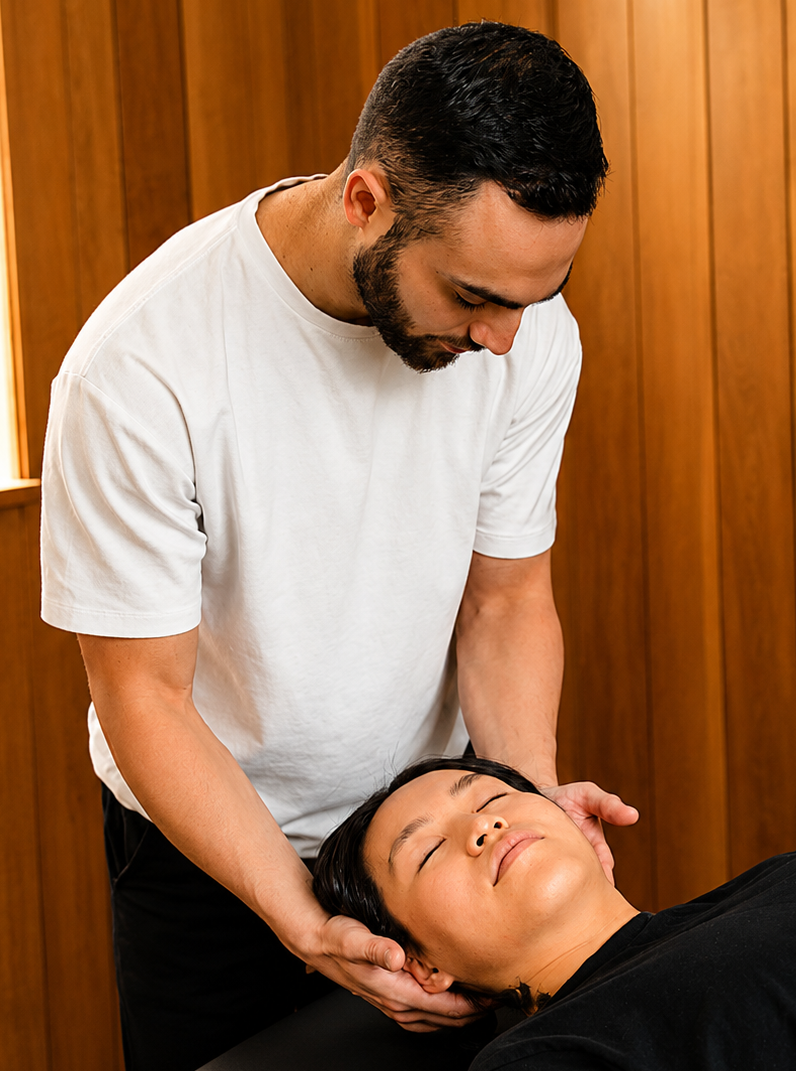
How We Treat Neck Pain
Treatment recommendations vary depending on your presentation, goals and assessment findings.
Chiropractic treatment may include joint mobilisation, spinal manipulation where appropriate, soft tissue techniques and rehabilitation exercises to improve movement, reduce pain and restore function.
Hands-on treatment focused on reducing muscular tension and improving mobility.
Dry Needling
May be incorporated where appropriate to address muscular tightness and trigger points.
Rehabilitation Exercises
Individualised exercises designed to improve strength, mobility and long-term neck function.
Ergonomic Advice
Strategies aimed at reducing postural stress and improving workplace setup.
Conditions Commonly Associated With Neck Pain
Desk-Related Neck Pain
Neck discomfort associated with prolonged sitting, computer work and repetitive postures.
Postural Neck Pain
Symptoms often linked to sustained positions and reduced movement throughout the day.
Some headaches may be associated with dysfunction and tension arising from the neck.
Neck Stiffness & Reduced Mobility
Difficulty turning the head and performing daily activities comfortably.
Who May Benefit From Neck Pain Treatment?

Office Workers
Active Individuals
Athletes

Parents

Tradies

Chronic Pain
FAQs
-
If symptoms are affecting daily activities, sleep, work or exercise, assessment may be beneficial.
-
Yes. Treatment recommendations depend on assessment findings and individual circumstances.
-
Certain headaches may be associated with neck dysfunction, muscular tension and reduced mobility.
-
Not always. Imaging recommendations are based on clinical findings and individual circumstances.
-
Treatment recommendations are based on a detailed history, examination findings and individual circumstances. Not every patient requires or is suitable for neck adjustments. Where appropriate, your chiropractor will discuss available treatment options, explain potential benefits and risks, and determine the most suitable approach for your presentation.
-
A stiff neck after sleeping may be related to sleeping position, pillow support, muscle tension or irritation of the joints in the neck. A thorough assessment can help determine the contributing factors.
-
Both can be helpful depending on your symptoms. Ice may be useful in the early stages of a recent injury, while heat may help relax tight muscles and reduce stiffness. Your practitioner can advise which option is most appropriate for your situation.
-
Yes. Prolonged sitting, computer work and sustained postures can place increased stress on the muscles and joints of the neck, contributing to pain, stiffness and reduced movement over time.
Start Feeling Better This Week
Book an appointment with our team and receive a personalised assessment and treatment plan for your neck pain.